| Pop Culture Gadabout | ||
|
Friday, September 16, 2011 ( 9/16/2011 01:53:00 AM ) Bill S. 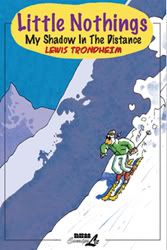 “I’VE BECOME A REAL ROAD WARRIOR.” Cartoonist, world traveler and observer of comic minutia, Lewis Trondheim returns with a fourth volume of Little Nothings (NBM). Subtitled “My Shadow in the Distance,” this newest set of funny animal autobiographical one-page strips follows our man/bird hero as he travels with his family on vacation in the U.S.A. (spying a “real cowboy” out west, he’s disappointed to see the cowpoke wearing a baseball cap), then hits a variety of European and South American locales for book signing and comic con appearances. Unlike some autobiographical alt cartoonists, Trondheim has a global range of tiny li’l experiences to illustrate. Walking the streets of Prague, dismayed at the “string of tacky souvenir shops” dotting the promenade, he looks up at the old architecture and thinks “from 8 feet up, it’s very beautiful!” “I’VE BECOME A REAL ROAD WARRIOR.” Cartoonist, world traveler and observer of comic minutia, Lewis Trondheim returns with a fourth volume of Little Nothings (NBM). Subtitled “My Shadow in the Distance,” this newest set of funny animal autobiographical one-page strips follows our man/bird hero as he travels with his family on vacation in the U.S.A. (spying a “real cowboy” out west, he’s disappointed to see the cowpoke wearing a baseball cap), then hits a variety of European and South American locales for book signing and comic con appearances. Unlike some autobiographical alt cartoonists, Trondheim has a global range of tiny li’l experiences to illustrate. Walking the streets of Prague, dismayed at the “string of tacky souvenir shops” dotting the promenade, he looks up at the old architecture and thinks “from 8 feet up, it’s very beautiful!”The fourth volume’s most enduring sequence takes place closer to home, however. Told that his sinuses have polyps and advised to avoid flying, Trondheim ultimately has to go under the knife. The strips capture our hero’s pre-op dread and post-op processing with a sharp and distinct wit. Clearing his nose in the aftermath, he describes getting a “gigantic monster” out of his nostril. “I should have taken a picture,” he tells his spouse. “I’m sure your artistic talent will be able to give us an exact idea of it all,” she responds. And, sure enough, the last image we get in the book is of Trondheim standing in the bathroom, a large red glob dripping out of his beak. Yet for all the anxieties and small annoyances catalogued by the writer/artist in these self-deprecating strips, he ultimately knows he’s got a pretty good life. Advised that sea bathing is highly recommended during his recuperation, the cartoonist tries snorkeling in the ocean off Mayotte (an island near Madagascar) but is unable to get any seawater in his nose. “Right. . . feel sorry for yourself, you poor dear,” he tells himself as he sits back in the water. Sometimes life’s little nothings really are little nothings. As with the previous entries in this series, Trondheim’s animal world plays the French artist’s cartoony figures against frequently detailed backgrounds (he loves rendering old European streets) and a soft water color-y palette. The latter is especially well suited to the cartoonist’s understated punchlines: these are the kind of comics more likely to elicit a nodding smile than a laugh. Those reading these strips for shockingly frank autobiographical confessions are hereby advised to look elsewhere. For the rest of us, Trondheim’s ongoing Portrait of the Artist as a Middle-Aged Bird continues to charm and deliver. (First published on Blogcritics.) Labels: art comics # |Tuesday, September 13, 2011 ( 9/13/2011 06:26:00 PM ) Bill S. 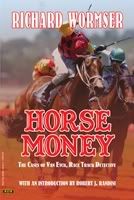 “WHAT CROOKED GAMBLERS SAY DOESN'T MEAN MUCH TO ME.” A prolific crafter of genre fiction and TV/movie novelizations, Richard Wormser's writing life was ironically encapsulated by the man himself in a posthumously published memoir, How to Become A Complete Nonentity. Yet Wormser (not to be confused with a younger filmmaker of the same name) had a full career writing westerns and crime fiction for the pulps and Hollywood. Horse Money (Black Dog Books), a slim 108-page collection of four novelettes from the 1930's, resurrects a too-short Blue Book detective series set in the world of horse racing. If Wormser's stories aren't exactly Dick Francis, they do provide a breezy snapshot of the pari-mutuel life circa mid-thirties. “WHAT CROOKED GAMBLERS SAY DOESN'T MEAN MUCH TO ME.” A prolific crafter of genre fiction and TV/movie novelizations, Richard Wormser's writing life was ironically encapsulated by the man himself in a posthumously published memoir, How to Become A Complete Nonentity. Yet Wormser (not to be confused with a younger filmmaker of the same name) had a full career writing westerns and crime fiction for the pulps and Hollywood. Horse Money (Black Dog Books), a slim 108-page collection of four novelettes from the 1930's, resurrects a too-short Blue Book detective series set in the world of horse racing. If Wormser's stories aren't exactly Dick Francis, they do provide a breezy snapshot of the pari-mutuel life circa mid-thirties.The quartet of tales are narrated by Chief Van Eyck, a racing commission cop who hangs around the tracks, thwarting bookies and race fixers, catching the occasional killer. Described as “fat” by both Van Eyck and his seen-it-all secretary/girlfriend Elizabeth, Van Eyck is himself an inveterate gambler with a rep for honesty, though he's not above playing fast and loose with his good name if it can sucker some bad guys. In one memorable moment, he even plays at going “blood simple,” threatening to gas both a straight-laced homicide detective and a suspect to get the latter to confess to a killing. Fortunately, the homicide detective is a somewhat forgiving type. Three of the pieces in Horse Money are set in an undisclosed, probably West Coast city; the title tale places our hero on his own in NYC. In “Right Guy,” Van Eyck's attempts at stopping a race fix are waylaid when the culprits kidnap his gal pal Elizabeth; in “Heat of the Moment,” our man gets between a machine gun toting gang of crooks and the tong, which leads to gun play and a few twists on period stereotypes. In “Horse Money,” Van Eyck has his own betting winnings stolen with the help of a shapely chorus girl. Though he has his own brief night on the Wonderful Town, we never doubt that our hero won't be riding the rails back to his girlfriend at story's end. Wormser doesn't slather on the race track lingo as much as a Damon Runyon, though he can craft some snappy, if decidedly un-PC patter. Confronted with a knife-wielding thug named Snapper McGill, for instance, the racetrack copper tells the mug, “Guys named McGill ought to confine themselves to bricks. Racially, the knife is not your weapon.” Like all good hard-boiled dicks, Van Eycks is a hard-ass smart-ass. When one of his wounded underlings manages to crack wise, he even affectionately grouses back: “Stop trying to steal my stuff. The boss makes the jokes.” And so he does. (First published on Blogcritics.) Labels: pulp fiction # | |
|
|